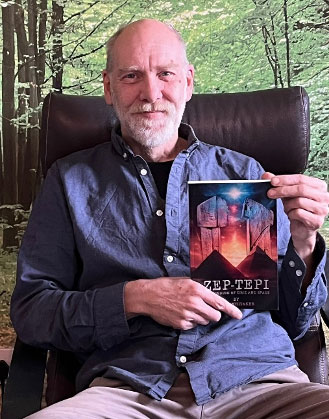
About Alex Whitaker

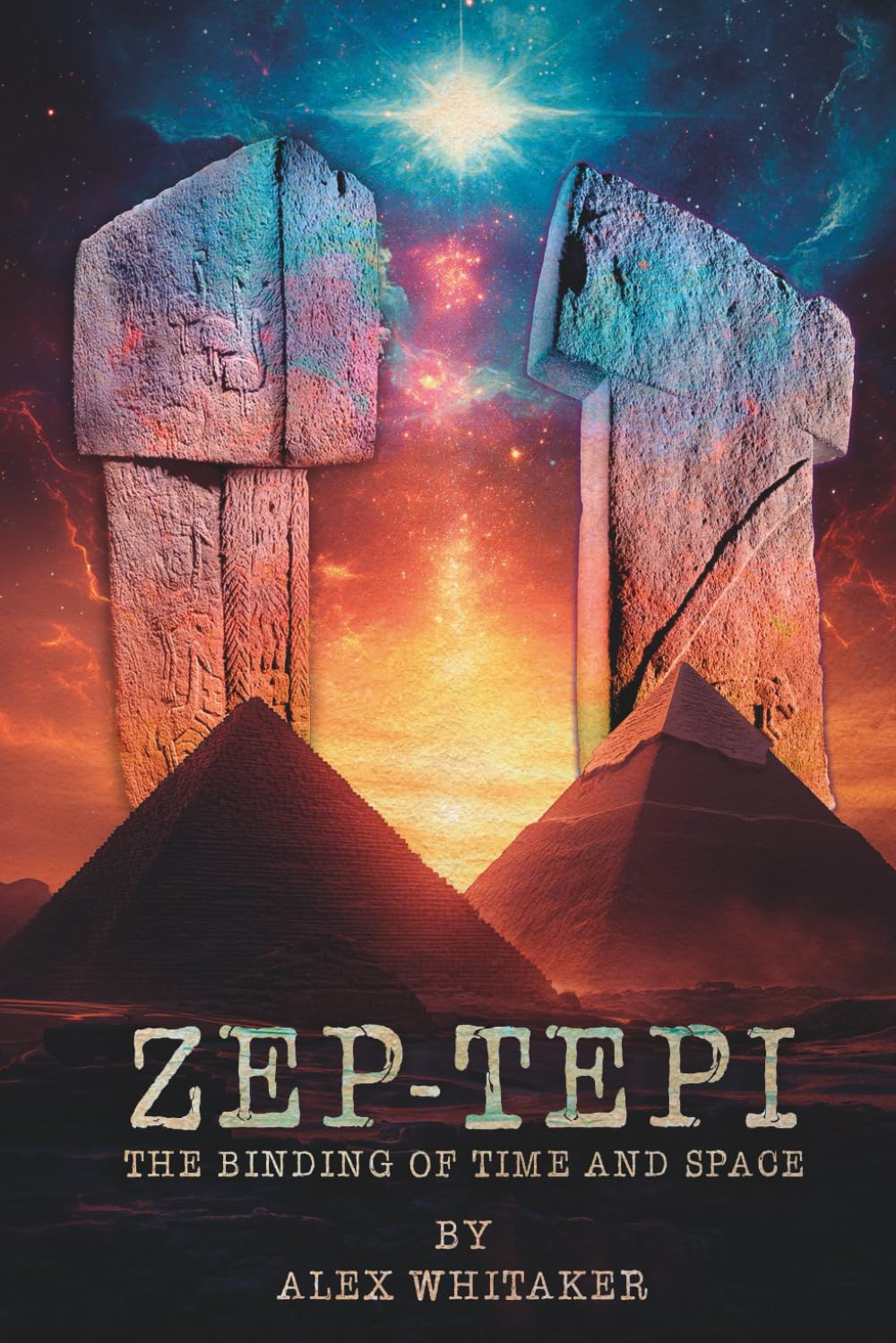
Alex Whitaker is a new English author. He was born in 1965 and has spent the majority of his life self-employed in one form or another. Having left school without any qualifications, he re-educated himself in his 30’s achieving a BSc (Hons) in Applied Ecology. This academic experience gave him a taste for research, which he combined with his passion for prehistory, megaliths and ‘a lifetime of collecting seemingly useless facts’ in an invisible process which ultimately resulted in the book ‘Zep-Tepi: The Binding of Time and Space’.

Having travelled extensively, visiting numerous megalith sites around the world, Whitaker was always left unsatisfied by the traditional narrative and ‘mysteries’ surrounding them. Whilst having no formal training in either Egyptology or Archaeology, he spent several years immersed in the subject and even introduced the world to the first pack of megalithic playing cards.

His debut book, Zep-Tepi: The Binding of Time and Space, presents a bold and meticulously argued proposal that ancient cultures possessed a unified understanding of geometry, longitude, and latitude — encoded in their myths, monuments, and religious traditions. Drawing from Egyptian, Sumerian, and Abrahamic sources, Whitaker explores how chronologies converge around the figure of Nimrod and how astronomical cycles may have shaped humanity’s earliest attempts to bind time and space into a single system of metrology. 

Committed to interdisciplinary inquiry and respectful engagement with both mainstream and alternative scholarship, his research focuses on uncovering hidden patterns in mythological narratives and architectural alignments across early civilizations. The work invites readers to reconsider the origins of scientific thought. At the same time as being forced to speculate from necessity, he has maintained an academic approach to the subject. His conclusions remind us that the most ancient structures and mythologies are echoes of a greater cycle—one that includes the rise and fall of humanity—which raises the simple question: Where are we in that cycle today?

All posts by Alex Whitaker